Ottawa is the only major Canadian health market where a provincial border runs through the patient population, a statutory French-language service obligation covers the facilities, and the first buyer a supplier meets is a group purchasing organization. Each of those three changes something concrete, and none of them is obvious from a map.
This article covers what is verifiable about how equipment actually reaches an Ottawa-region facility, which common assumptions do not survive contact with the source documents, and which questions we could not answer with published data.
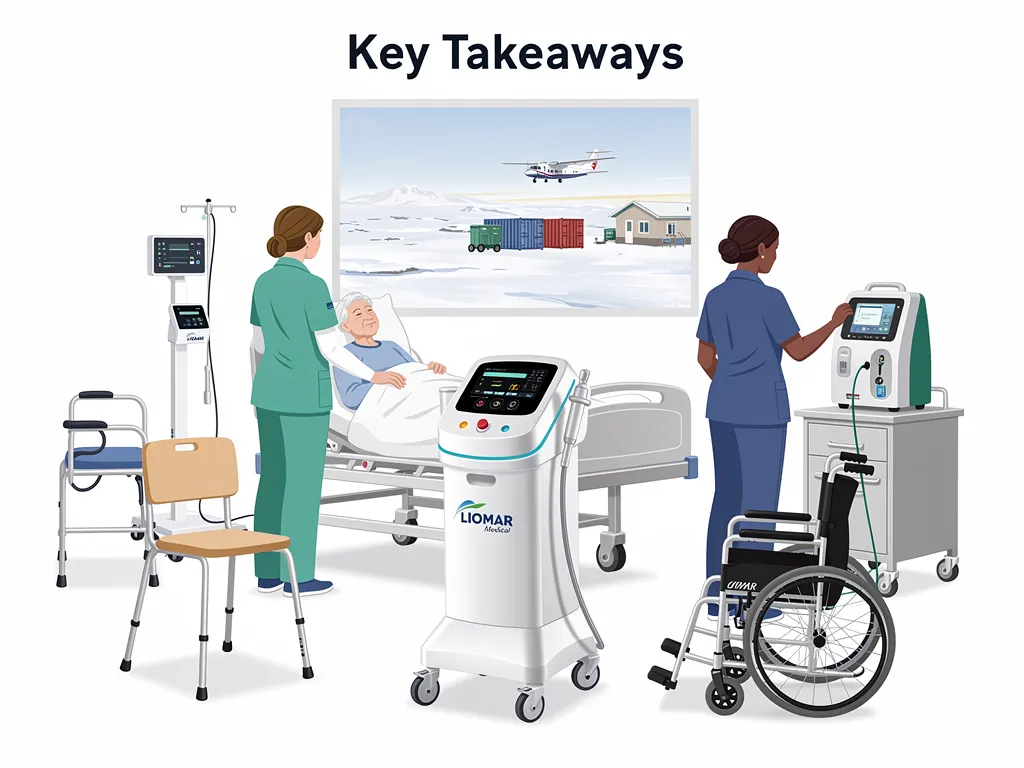
Key Takeaways
- Quebec belongs to the interprovincial hospital billing agreement but not the physician one, and Ontario maintains a Quebec-specific hospital rate sheet through 2026-27 (Ontario Ministry of Health, InfoBulletin 260313).
- Full bilingual labelling depends on whether the device is intended for general-public sale, not on who signs the purchase order. The federal floor is English or French (Medical Devices Regulations, s. 23).
- Eastern Ontario holds 44.5% of all Ontario francophones, and they are 15.4% of the regional population, against 4.6% province-wide (Government of Ontario, 2021).
- The Ottawa Hospital does not run its own sourcing. It partners with Mohawk Medbuy under the Broader Public Sector Procurement Directive.
- Health Canada’s mandatory shortage-reporting list covers 23 device categories and was last updated 6 May 2026.
What Differentiates Ottawa From Other Ontario Health Markets
Three structural features differentiate Ottawa from Toronto, Hamilton or London as a place to supply equipment.
It sits on a provincial boundary, with a second health system operating across the river in Gatineau. Its region carries statutory French-language service obligations across the largest concentration of francophones in the province. And its largest hospital buys through a shared sourcing organization, which means the first decision-maker a supplier meets is often not the hospital.
None of these is about distance, and that matters. The supply chain question in Ottawa is administrative, not logistical.
The River Splits Two Billing Systems
Ottawa-Gatineau is a single census metropolitan area spanning two provinces. The health consequence is that two insurance and reimbursement systems meet inside one labour market.
The split is narrower and stranger than most people assume. Quebec has joined the interprovincial agreements covering hospital care, so hospital services provided to a Quebec resident in another province are covered. Quebec has not joined the agreement covering physician services (CISSS de l’Abitibi-Témiscamingue, Access to medical services in Ontario). For non-urgent care, the Ontario physician decides whether to accept a Quebec patient at all.
The administrative residue of that split is visible in Ontario’s own billing documents. Ontario hospitals continue to submit Quebec outpatient claims on a separate, revised combined rate sheet, distinct from the general out-of-province sheet, with rates effective 1 April 2026 and continuing “until further notice” (Ontario Ministry of Health, OHIP InfoBulletin 260313). A second thing changed recently on the Quebec side: as of 1 August 2025, the CISSS de l’Abitibi-Témiscamingue stopped acting as the billing intermediary for medical services rendered in Ontario.
For a supplier, the practical read is that an Ottawa facility’s patient population and its funding flows do not share the same boundary. That is a planning problem for the facility, and it is worth understanding before assuming a purchase decision is driven only by Ontario volumes.
We should be straight about the limit here. We could not verify any current figure for interprovincial patient flow in Ottawa-Gatineau. The numbers that circulate trace back to a single 2018 news report on 2017 data, which is both unverifiable at source and too old to describe the market in 2026.
French Is a Service Obligation, Not a Labelling One
This is the assumption most often stated backwards, including by suppliers who think it works in their favour.
Health Canada’s Medical Devices Regulations set the federal floor at one official language. Section 23(1) requires the mandated label information “as a minimum, be in either English or French.”
Section 23(3) then adds full bilingual labelling “in respect of a medical device to be sold to the general public.” Read that trigger carefully, because it is widely misread. It attaches to the device and the market it is intended for, not to the identity of whoever signs a given purchase order. A monitor or a medication cart supplied only into institutional channels does not trigger it. A patient lift, a rollator or a shower chair that is also sold to consumers does, including on the unit that happens to go to a hospital.
One scope note, because this is the federal device rule and nothing more. A manufacturer shipping into Quebec is separately subject to the Charter of the French language for product inscriptions, and a device moving through consumer channels picks up federal packaging and labelling law as well. “Not required by the Medical Devices Regulations” is not the same sentence as “not required.”
So the federal rule is weaker than people assume. The provincial obligation is the demanding one.
Under Ontario’s French Language Services Act and its designation regulation, designated health service providers must deliver services in French. Eastern Ontario is where that obligation concentrates: the region is home to 290,665 francophones, which is 44.5% of all francophones in Ontario, and they represent 15.4% of the regional population against 4.6% province-wide. Ontario counts 652,540 francophones in total, so nearly half of them live within reach of an Ottawa-region facility (Government of Ontario, Profile of the Francophone population in Ontario, 2021).

Now read section 23(2) of the regulations with that in mind. Where directions for use are supplied in only one official language at the time of sale, the manufacturer must make the other language available “as soon as possible at the request of the purchaser.”
That sentence is the whole commercial point. A unilingual supplier is compliant. It is compliant after the buyer asks, and as soon as possible after that. A designated francophone facility putting a device into service on a clinical unit cannot run on that timeline. The gap between federal compliance and operational usefulness is where a bilingual manufacturer wins, and it is a procurement conversation rather than a regulatory one.
Your First Buyer Is a Group Purchasing Organization
The Ottawa Hospital states it plainly: it has partnered with Mohawk Medbuy Corporation for its sourcing and contracting services (The Ottawa Hospital, Doing Business with The Ottawa Hospital).
That single sentence redirects most supplier effort. Mohawk Medbuy reports over $3 billion of spend under contract. In the southeastern corridor, a further layer exists: 3SO, the shared services organization serving Kingston Health Sciences Centre, Brockville General, Providence Care, Quinte Health and others, announced a collaboration with Mohawk Medbuy and The Ottawa Hospital in July 2022.
The governing rules are provincial and contractual, not local. The Ottawa Hospital cites the Broader Public Sector Procurement Directive in its April 2024 version, the Building Ontario Businesses Initiative Act, the Supply Chains Act, and both CETA and the Canadian Free Trade Agreement. Two operational rules are worth knowing before anyone drives to a loading dock: every good or service procured must have a valid purchase order, and vendor representatives must enter through a public entrance, by appointment only.
One correction worth making, because it appears constantly in supplier material. Ontario Health does not buy equipment on behalf of individual hospitals. Its published regional role is system planning, funding allocation, performance monitoring and accountability. A hospital’s equipment purchase runs under the provincial Broader Public Sector Procurement Directive, in Ottawa’s case through Mohawk Medbuy. For the thresholds that decide whether a purchase must go to open tender, see our guide on how to buy a hospital crash cart in Canada.
How Far Does “Ottawa” Actually Reach?
Further than the city, and that shapes any distribution or service commitment a supplier makes.
Ontario Health East, the region containing Ottawa, officially spans “diverse urban and rural communities from Pickering to Deep River to the Quebec border” (Ontario Health, Ontario Health Regions). Deep River sits at the far end of Renfrew County, roughly two hours northwest of Ottawa. Pickering is on the edge of the Greater Toronto Area. A single regional geography therefore stretches most of the way across southeastern Ontario.
Within that span, the scale is not uniform. Queensway Carleton Hospital, one of several Ottawa hospitals, operates 355 beds and reports serving almost 500,000 people a year, about half the city’s population, with more than 3,000 health professionals. CHEO, the region’s pediatric centre, recorded 709,438 total patient visits in its 2024-25 fiscal year against total expenditures of $551.4 million, of which 54% went to salaries and benefits.
That last number is the one suppliers should sit with. We have written elsewhere on how equipment choices affect healthcare workforce productivity, and the arithmetic is the same here. When more than half of a facility’s cost base is people, equipment that changes how many staff a task requires is being evaluated against a very large denominator.
A caution on this section. We found no published document establishing a medical supply or delivery failure in Renfrew, Lanark, Prescott-Russell or Cornwall. The reach of the region is verified geography. A service problem inside that geography would be an inference, and it is labelled as one here. For genuine, documented remote supply constraints, our article on medical equipment in Northern Canada covers a market where the evidence does exist.
Shortage Exposure Is a Tracked List, and It Moves
Canada regulates medical device shortages by mandatory reporting rather than by stockpile. Manufacturers of Class I through IV devices, and importers of Class I devices, must report shortages and discontinuations for devices on Health Canada’s list.
That list covers 23 device categories and the current version is dated 6 May 2026. It is revised periodically rather than fixed: categories were added in November 2025 and removed in January 2026. That churn is the argument for checking the live list rather than assuming it is static. Categories relevant to acute and long-term care buyers include:
| Category group | Examples on the list |
|---|---|
| Airway and respiration | Anesthesia delivery devices, endotracheal tubes, oxygen delivery devices, ventilators including BiPAP and CPAP |
| Resuscitation and monitoring | Defibrillators, vital signs monitors, arterial blood gas devices |
| Vascular access | Peripherally inserted central catheters, umbilical catheters, infusion filters, intravascular shunts |
| Personal protective equipment | Medical gloves made of nitrile, N95 respirators for medical use |
| Drainage and surgical | Chest drainage systems, external drainage systems, urinary drainage systems, surgical staplers |
The practical use is simple. A materials manager can check whether a category they depend on is reportable, which tells them whether a future disruption will surface publicly or arrive as a surprise from a distributor.
Note that this regime is national. Presenting it as an Ottawa problem would be a distortion, so it is flagged as context rather than as a local finding.
The Federal Capital Question, Answered Honestly
Ottawa hosts Health Canada, Public Services and Procurement Canada, and the administration of the federal emergency stockpile. Supplier marketing occasionally implies this gives the region some procurement advantage or peculiarity.
We looked, and we found no evidence for it. An Ottawa hospital buys under the provincial Broader Public Sector Procurement Directive through a group purchasing organization, exactly as a hospital in London or Sudbury does. Proximity to a federal regulator confers nothing on a regional buyer. The federal layer that genuinely matters is regulatory rather than geographic: device licensing and shortage reporting bind a manufacturer nationally, from wherever it operates.
Naming that as a non-factor is more useful than inventing a story around it.
What We Could Not Verify
Publishing the gaps is part of the argument. Each of these is a question a reader might reasonably expect answered, and we are not going to fill it with a plausible-sounding number.
- Ottawa-Gatineau population and its Quebec-side share. Statistics Canada’s census profile pages did not return readable data on repeated attempts. The structural claim, that the metropolitan area spans two provinces, stands without the figure.
- Interprovincial patient volumes. No current published figure. The circulating numbers trace to one 2018 report on 2017 data.
- The Ottawa Hospital’s beds, volumes, staffing and budget. Not published in a form we could read. The procurement facts above come from the hospital’s own vendor page, which is reliable; the operational figures are not something we will estimate.
- Bed counts and designated status for Montfort, Bruyère and the Royal Ottawa. Conflicting figures circulate. None was confirmable at source.
- Ottawa-region staffing constraints for 2024 to 2026. The available material is advocacy publishing rather than primary data.
Frequently Asked Questions
Does Health Canada require medical devices to be labelled in both English and French?
It depends on the device, not on the buyer. The minimum is English or French. Full bilingual labelling applies to devices intended for sale to the general public, which captures consumer-channel products such as rollators and shower chairs even when a unit goes to a hospital. For institutional-only devices, French directions for use are supplied on request.
Who actually buys medical equipment for Ottawa hospitals?
The Ottawa Hospital partners with Mohawk Medbuy Corporation for sourcing and contracting. Ontario Health, despite its name, does not buy equipment on behalf of individual hospitals. Its published regional role is planning, funding and performance monitoring. Suppliers should expect the group purchasing organization to be the first and most substantive point of contact.
Do Quebec residents treated in Ottawa hospitals create billing complications?
Yes, partially. Quebec participates in the interprovincial hospital billing agreement but not the physician one, so hospital care is covered while physician services are not. Ontario maintains a Quebec-specific hospital rate sheet separate from its general out-of-province sheet through the 2026-27 fiscal year.
What is on Health Canada’s medical device shortage list?
Twenty-three device categories, last updated 6 May 2026. They include defibrillators, ventilators, endotracheal tubes, oxygen delivery devices, nitrile medical gloves, N95 respirators, vital signs monitors, and several catheter and drainage categories. Manufacturers and Class I importers must report shortages for listed devices.
Does French-language capability matter when selling to Ottawa health facilities?
It matters as a service obligation rather than a labelling rule. Eastern Ontario holds 44.5% of Ontario’s francophones, and designated health service providers must deliver services in French. A supplier that ships French documentation only after a request creates a delay a designated facility absorbs poorly.
The Bottom Line
Ottawa’s supply chain difficulty is administrative, not logistical. The roads are fine. The paperwork sits on a provincial seam.
- The river separates two billing systems, and Ontario still keeps a Quebec-specific hospital rate sheet in 2026-27.
- The federal labelling floor is one official language. The provincial service obligation is the demanding standard, and Eastern Ontario is where it concentrates.
- The Ottawa Hospital’s sourcing runs through Mohawk Medbuy under the provincial directive, so the GPO conversation precedes the hospital conversation.
- Shortage exposure is a published, moving list worth checking rather than assuming.
- The federal capital angle is a non-factor, and treating it as one saves everyone time.
Facilities and suppliers working this region can start by confirming one thing: which GPO agreement, if any, already covers the category in question. That answer determines the entire path, and it is usually faster to obtain than a quote.
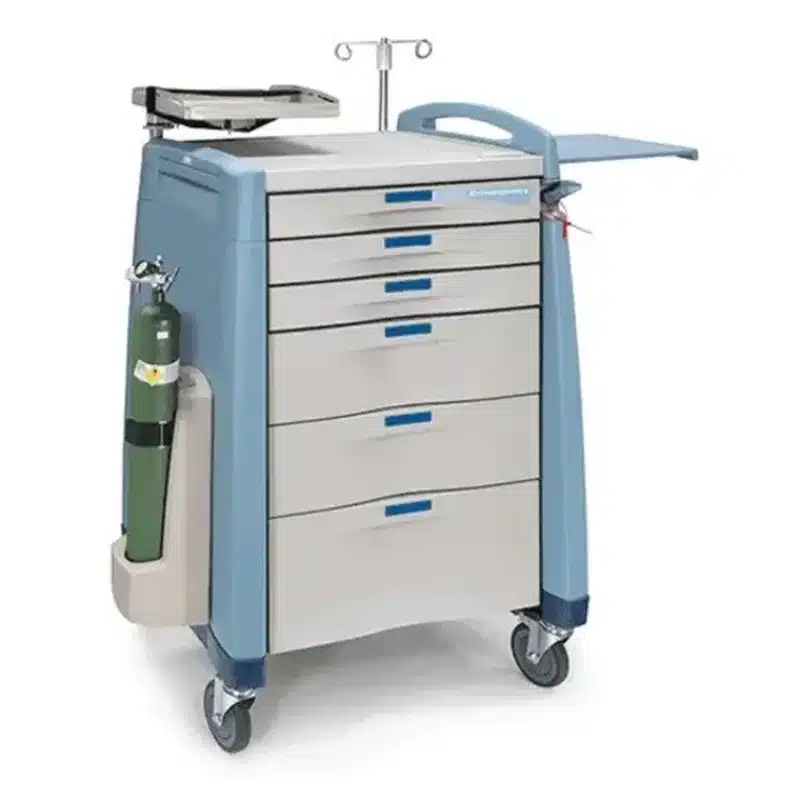
Browse our medical cart range, or get in touch if you are evaluating equipment for a designated francophone facility.
About the Author
Mario P. Cloutier is co-founder and CEO of LIOMAR Medical Inc., a Montreal-based manufacturer and distributor of medical equipment for bedridden patients, long-term care residents, and people with reduced mobility. He founded the life sciences sales and marketing agency Xclamat!on in 2002 and has worked with Fortune 500 organizations across the healthcare sector. LIOMAR Medical operates in both official languages and is a member of the HealthPRO Canada Innovation Accelerator program, which connects manufacturers to more than 2,000 Canadian health facilities.
Connect on LinkedIn · Learn more about LIOMAR Medical
Sources
- Government of Canada. Medical Devices Regulations (SOR/98-282), sections 21 to 23. Justice Laws Website. Retrieved 2026-09-23. laws-lois.justice.gc.ca/eng/regulations/sor-98-282/page-2.html
- Health Canada. List of Medical Devices: Notification of Shortages, mandatory reporting. Updated 6 May 2026. Retrieved 2026-09-23. www.canada.ca/en/health-canada/services/drugs-health-products/medical-devices/shortages/mandatory-reporting.html
- Health Canada. Who must report: Guide to reporting medical device shortages. Retrieved 2026-09-23. www.canada.ca/en/health-canada/services/drugs-health-products/medical-devices/shortages/guide-reporting-shortages-discontinuations/who-must-report.html
- Ontario Ministry of Health. OHIP InfoBulletin 260313: Updates to 2026-27 Ontario hospital interprovincial billing. Retrieved 2026-09-23. www.ontario.ca/document/ohip-infobulletins-2026/bulletin-260313-updates-2026-27-ontario-hospital-interprovincial
- CISSS de l’Abitibi-Témiscamingue, Gouvernement du Québec. Access to medical services in Ontario: questions and answers. Retrieved 2026-09-23. www.cisss-at.gouv.qc.ca/en/access-to-medical-services-in-ontario-questions-and-answers
- Government of Ontario. Profile of the Francophone population in Ontario, 2021. Retrieved 2026-09-23. www.ontario.ca/page/profile-francophone-population-ontario-2021
- The Ottawa Hospital. Doing Business with The Ottawa Hospital. Retrieved 2026-09-23. www.ottawahospital.on.ca/en/patients-and-visitors/doing-business-ottawa-hospital
- Ontario Health. Ontario Health Regions. Retrieved 2026-09-23. www.ontariohealth.ca/system/regions.html
- Mohawk Medbuy Corporation. About. Retrieved 2026-09-23. www.mohawkmedbuy.ca/about
- Mohawk Medbuy Corporation. Mohawk Medbuy, The Ottawa Hospital and 3SO collaborating to strengthen the healthcare supply chain in Eastern Ontario. 19 July 2022. Retrieved 2026-09-23. www.mohawkmedbuy.ca/news_blog/2022/7/14/mohawk-medbuy-the-ottawa-hospital-and-3so-collaborating
- CHEO. Annual Report 2024-25. Retrieved 2026-09-23. www.cheo.on.ca/en/about-us/annual-report-2024-25.aspx
- Queensway Carleton Hospital. Quick Facts. Retrieved 2026-09-23. www.qch.on.ca/QuickFacts
- Réseau des services de santé en français de l’Est de l’Ontario. French Language Services Act designation, frequently asked questions. Retrieved 2026-09-23. www.rssfe.on.ca/upload-ck/7829_rfsse_FAQ_EN_ACCESSIBLE.pdf