
In-Bed Shower System for Bedridden Patients
showers in bed using Wishower.

What Is the Wishower In-Bed Shower System?

Transforming Patient Hygiene with the Wishower System
Designed and made in Montreal, Canada, this mobile hygienic device is a true paradigm shift in hygienic care, benefitting not only patients, but also their families and healthcare professionals.
Description And Benefits
Healthcare facilities, including hospices, nursing homes, hospitals, and senior living facilities that care for non-autonomous patients,whether they are bedridden, have limited mobility, experience cognitive impairment, are bariatric, or are receiving palliative care – can derive numerous advantages from this solution.
This mobile shower device has been specifically designed to provide full-body showers in the residents beds. This equipment offers healthcare facilities a highly secure alternative to traditional methods that may not always be suitable for some residents' conditions. Wishower enhances the experience by maximizing both comfort and efficiency.
Instead of lifting and transporting patients to the bathing area, Wishower literally meets the individuals in their bedroom, allowing patient care attendants to shower them from head to toe in the comfort of their own bed. It is equipped with a digital touchscreen to provide a user-friendly experience and comes with high quality accessories that simulate the form of a bath on the bed.
With Wishower, the time traditionally dedicated to ''basic hygienic care'' is significantly reduced, which allows patient care attendants to channel their efforts towards maximizing the comfort and well-being of their patients.
As the shower in bed eliminates the need for patient transportation, it plays a significant role in reducing the risks of falls, accidents, injuries and infection spread, that may occur during the transportation of patients within the facility. This solution is also known for its ergonomic design and safety features, ensuring that nursing staff and patient care attendants can perform hygienic care to residents in a secure and comfortable manner.
With Wishower, it is much easier to reach bathing standards, gain benefits and improve non-autonomous patients' lives.

Why our in-bed shower sytem?
Mobile and lightweight
Ergonomic and safety features
Simple and easy to use
Low noise sound profile
How Do You Shower a Bedridden Patient Without a Transfer?
To shower a bedridden patient without a bathroom transfer, healthcare facilities use an in-bed shower system. Instead of lifting and transporting the resident to the bathing area, the device is brought to the bedroom and delivers a full-body shower directly on the bed, using a waterproof bed cover, warm running water and a digital touchscreen. No lifting, hoisting or transport is required.
Together, let’s restore patient’s dignity by switching from sponge baths to showers in bed using Wishower.
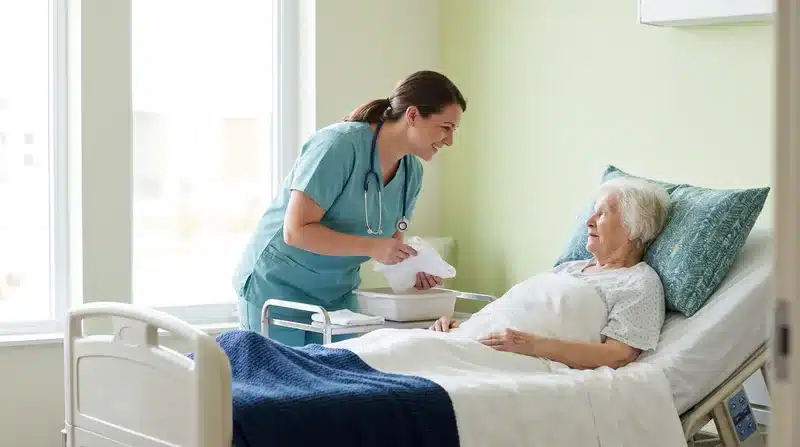
Meet with one of our representatives to explore the solution and get answers to your questions!
6 Reasons To Transition To An In-Bed Shower System
1. Saves Time and Resources
Saves up to 50% of caregivers time* for each complete hygienic care while providing a complete patient centered experience.
The in-bed shower, including body wash and shampoo, can often be done in less than 8 minutes*.
The whole shower process, from the preparation to the decontamination process, can be carried out in less than 26 minutes**. This represents substantial water and energy savings if we compare it to the general consumption of shower gurneys, stretcher-showers and therapeutic baths.
*Average washing time based on internal tests.
**Duration of the entire hygienic care process, from the preparation to the end of the disinfection, based on internal tests.
2. Limits The Spread of Infections
Limits the spread of infections by keeping residents in their bedroom and eliminating the transportation to the bathing area. Also, the whole decontamination process can be done directly in the resident’s bathroom.
Furthermore, the touchscreen constantly displays the functions and key indicators and instructions are provided during the disinfection process, ensuring enhanced precision, resulting in an optimal user experience.
We serve long-term care homes, hospitals, assisted living facilities, and rehabilitation centres in Ontario, British Columbia, Alberta, Quebec, and other provinces.
Contact our team for shipping timelines, volume pricing, and to discuss multi-facility or network-wide orders.
3. Reduces Risks of Injuries
The reduction of manipulation and inner transportation automatically decreases unnecessary risks of injuries to patients and nursing staff.
Furthermore, the touchscreen constantly displays the functions and key indicators and instructions are provided during the disinfection process, ensuring enhanced precision, resulting in an optimal user experience.
We serve long-term care homes, hospitals, assisted living facilities, and rehabilitation centres in Ontario, British Columbia, Alberta, Quebec, and other provinces.
Contact our team for shipping timelines, volume pricing, and to discuss multi-facility or network-wide orders.
4. Ergonomic and Easy to Use
The device has been purposefully designed to make it easy for staff to perform complete hygienic care in a comfortable position. This equipment is also easily moved from one room to another, thereby eliminating the need for strenuous physical efforts to transport or bathe a resident.
Furthermore, the touchscreen constantly displays the functions and key indicators and instructions are provided during the disinfection process, ensuring enhanced precision, resulting in an optimal user experience.
We serve long-term care homes, hospitals, assisted living facilities, and rehabilitation centres in Ontario, British Columbia, Alberta, Quebec, and other provinces.
Contact our team for shipping timelines, volume pricing, and to discuss multi-facility or network-wide orders.
5. Maximum Patient Comfort
Given that the patient benefits from a complete shower in their own bed, their well-being and dignity are at the forefront. Not only is it possible to adjust the water temperature according to each individual’s preferences, but the accessories used with the Wishower have been carefully designed to enhance comfort while ensuring their durability.
We serve long-term care homes, hospitals, assisted living facilities, and rehabilitation centres in Ontario, British Columbia, Alberta, Quebec, and other provinces.
Contact our team for shipping timelines, volume pricing, and to discuss multi-facility or network-wide orders.
6. More Intimacy, Dignity and Safety
Since we do not lift, hoist or transport residents anymore, we can avoid many risks related to traditional hygienic methods. There is a significant reduction of fear, anxiety and panic reactions from residents towards bathing care. They can now enjoy a shower in bed in their own safe and comfortable environment.
We serve long-term care homes, hospitals, assisted living facilities, and rehabilitation centres in Ontario, British Columbia, Alberta, Quebec, and other provinces.
Contact our team for shipping timelines, volume pricing, and to discuss multi-facility or network-wide orders.
In-Bed Shower vs Sponge Bath vs Shower Trolley?
| In-bed shower Wishower | Sponge bath | Shower gurney or trolley | |
|---|---|---|---|
| Patient transfer required | No | No | Yes |
| Full body rinsed with running water | Yes | No | Yes |
| Shampoo included | Yes | Limited | Yes |
| Resident stays in own room | Yes | Yes | No |
| Exposure to shared bathing areas | None | None | Yes |
| Lifting or hoisting of the resident | None | None | Required |
| Water and energy consumption | Low | Very low | High |
| Complete cycle including disinfection | Under 26 minutes** | Varies | Varies |
**Duration of the entire hygienic care process, from the preparation to the end of the disinfection, based on internal tests.
Where the Wishower Is Used in Canada
Long-term care homes and CHSLDs
In long-term care, most residents are non-autonomous and bathing is a daily constraint on staff time. An in-bed shower lets care attendants complete hygienic care in the resident's own room, without booking a shared bathing area and without transporting the resident through the facility.
Hospitals and rehabilitation centers
In a hospital setting, moving a bedridden patient for bathing means mobilizing several staff members and exposing the patient to falls and to shared surfaces. Wishower keeps the entire hygienic care process at the bedside, which supports infection control protocols and frees clinical time.
Hospices, palliative care and senior living facilities
For residents in palliative care, comfort and dignity take priority over every other consideration. An in-bed shower removes the fear and anxiety associated with being lifted and transported, and lets the resident receive complete hygienic care without leaving their bed.
Frequently Asked Questions
How do you shower a bedridden patient?
To shower a bedridden patient without a bathroom transfer, healthcare facilities use an in-bed shower system like Wishower by LIOMAR Medical. It delivers a full-body shower directly on the patient’s bed using a waterproof bed cover, warm running water and a digital touchscreen, with no lifting, hoisting or transport required.
What is an in-bed shower system?
An in-bed shower system is a mobile medical device that lets nursing staff give a bedridden or non-autonomous patient a complete shower, including body wash and shampoo, without moving them from their bed. Wishower, designed and made in Montreal, Canada, is used in Canadian hospitals, CHSLDs and long-term care homes.
In-bed shower vs sponge bath, which is better for bedridden patients?
Yes In-bed showers provide more thorough hygiene than sponge baths, which supports infection control and skin integrity in bedridden residents. Unlike a sponge bath, an in-bed shower system rinses the full body with running water, closer to a real shower experience, while keeping the resident in their own bed.
What are bed bath alternatives for long-term care facilities?
The main alternatives to a traditional bed bath are shower gurneys, stretcher-showers, therapeutic baths and in-bed shower systems. In-bed systems like Wishower avoid patient transfers entirely, completing a full shower and shampoo in less than 8 minutes and the entire hygienic care cycle, including disinfection, in less than 26 minutes.
We serve long-term care homes, hospitals, assisted living facilities, and rehabilitation centres in Ontario, British Columbia, Alberta, Quebec, and other provinces.
Contact our team for shipping timelines, volume pricing, and to discuss multi-facility or network-wide orders.
How much time does the Wishower save caregivers?
Wishower can save up to 50% of the time typically spent on complete hygienic care, based on LIOMAR Medical internal testing. A complete body wash and shampoo takes less than 8 minutes, and the full cycle from preparation through disinfection is completed in less than 26 minutes per resident.
We serve long-term care homes, hospitals, assisted living facilities, and rehabilitation centres in Ontario, British Columbia, Alberta, Quebec, and other provinces.
Contact our team for shipping timelines, volume pricing, and to discuss multi-facility or network-wide orders.
Does the Wishower reduce infection risk in long-term care facilities?
By eliminating patient transport to a shared bathing area, Wishower limits cross-contamination between residents and keeps the entire hygienic care and decontamination process within the resident’s own room. This reduces shared-surface contact, which is a known contributor to facility-acquired infections in nursing homes and hospitals.
We serve long-term care homes, hospitals, assisted living facilities, and rehabilitation centres in Ontario, British Columbia, Alberta, Quebec, and other provinces.
Contact our team for shipping timelines, volume pricing, and to discuss multi-facility or network-wide orders.
Can the Wishower be tried before purchase?
Yes. LIOMAR Medical offers a free virtual demo of Wishower, and in-person demonstrations can be arranged with a representative under certain conditions. Facilities can also request a quote and inquire about available options before purchase.
We serve long-term care homes, hospitals, assisted living facilities, and rehabilitation centres in Ontario, British Columbia, Alberta, Quebec, and other provinces.
Contact our team for shipping timelines, volume pricing, and to discuss multi-facility or network-wide orders.
Enhance Patients Lives
Where Convenience Meets Quality
Meet with one of our representatives to explore the solution and get answers to your questions!
