In the current healthcare environment, providing outstanding patient care while remaining aware of the operational limitations is a constant struggle, especially for bedridden or mobility-impaired patients in the healthcare system.
Utilizing conventional means for bathing these individuals—such as sponge baths or transferring them to a shower facility—frequently creates bottlenecks in staff resources, poses injury risks, accentuates infections spread and undermines patient dignity.
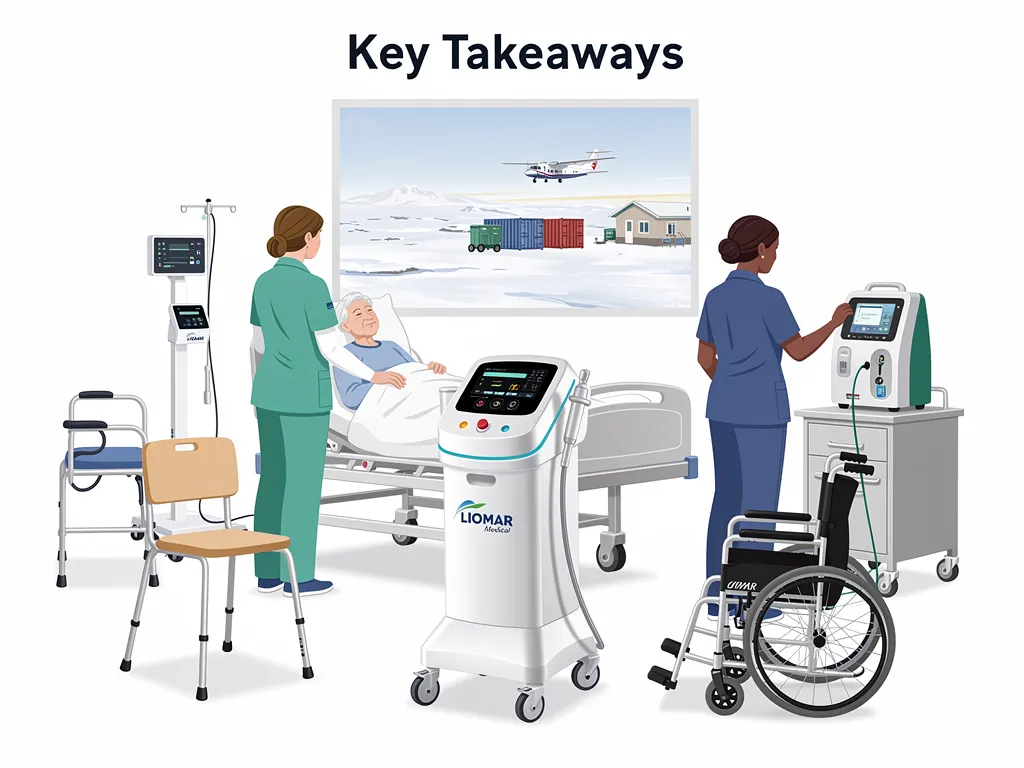
Simultaneously, healthcare institutions are confronted with increasing demand to implement sustainable and socially responsible practices, propelled by Environmental, Social, and Governance (ESG) principles. Conscious of these challenges, LIOMAR Medical, an innovating company based in the greater Montreal since 2020, has developed the Wishower, an in-bed shower system made in Canada that effectively tackles caring difficulties while helping to improve efficiency, safety, and ethical impact for patients and healthcare workers.
See the Wishower in action — the in-bed shower system built for bedridden and mobility-limited patients.
Discover the WishowerFor those not familiar with ESG, it is a framework for evaluating a company’s environmental impact, social responsibility, and governance standards, which is becoming increasingly vital in healthcare as regulators, investors, and communities want accountability.
For healthcare personnel in nursing homes, hospitals, and rehabilitation centers, ESG represents not merely a trend, but a strategy for resilience, financial efficiency, and improved patient outcomes.
This article examines how the Wishower exemplifies ESG principles, supported by persuasive statistics, that could transform patient care, more specifically ‘’traditional hygienic care’’,while fulfilling the sustainability demands of contemporary healthcare.

Comprehending ESG in Healthcare
Before exploring the advantages of Wishower, it is essential to define ESG within the healthcare framework:
Environmental:
Mitigating carbon emissions, energy consumption, and waste is essential, considering healthcare’s 4.4% share of global CO2 emissions, according to a 2023 report. Be Eco Report. Social: Improving patient welfare, ensuring workforce safety, and promoting community health, as highlighted in PwC’s ESG integration guide.
Governance:
Ensuring openness, ethical conduct, and adherence to regulations, essential for fostering trust and accountability, according to Modern Healthcare.
Traditional bathing methods are inadequate in several respects:
When factoring all the ‘’before-during-after’’ required steps of clinical and non-clinical personnel involved in traditional bathing of bedridden patients, the total staff time and total energy footprint add on significantly. Furthermore, traditional methods oftenexpose workers and patients alike, to potential hazards, infections, well-being discomfort and even emotional traumas. The Wishower redefines this whole process for the benefit of bed bound patients/residents, the healthcare community. It also aligns perfectly with ESG to provide pragmatic and ethical advantages.
The Difficulties of Conventional Bathing Techniques
Traditional bathing methods have inefficiencies that ESG aims to rectify
Time and Resource Expenditure: Bathing a patient requires 30 to 40 minutes, according to OSHA ergonomic studies, using staff hours and requiring energy-intensive configurations such as water heating and transportation apparatus.
Staff Safety Risks:
In the United States, lifting patients results in 34.2 injuries per 100 nursing aides yearly, according to the Bureau of Labor Statistics, while in Canada, WorkSafeBC attributes 60% of healthcare claims to overexertion.
A research published in Patient Discomfort: A Journal of Gerontological Nursing revealed that 68% of patients experienced feelings of indignity during transport-based bathing, adversely affecting their social well-being.
Infection Exposure:
Shared facilities account for 220,000 healthcare-associated infections annually in Canada, incurring a cost of $1 billion, according to the Public Health Agency. 8. Economic and Ecological Expenditures: Overtime, injuries ($14,000–$37,000 per claim) 69, and infection treatments exert pressure on finances and resources, undermining ESG sustainable objectives.
These challenges underscore the necessity for innovative, ESG-compliant solutions such as the Wishower.

DISCLAIMER: The material contained in this document is for informational purposes only. LIOMAR Medical Inc. and its representatives do not make any representations or warranties, express or implied, as to the accuracy, reliability, or completeness of such information.
Sources:
1.Plan Be Eco. (2023). ESG Reporting in the Healthcare Industry. Retrieved from planbe.eco.
2. .PwC. (2021). How Health Organizations Can Integrate ESG Priorities. Retrieved from pwc.com.
3. Modern Healthcare. (2022). ESG: Healthcare’s New Imperative. Retrieved from modernhealthcare.com.
4. Occupational Safety and Health Administration (OSHA). (n.d.). Ergonomics in Healthcare. Retrieved from osha.gov.
5. U.S. Bureau of Labor Statistics. (2022). Occupational Injuries and Illnesses in Healthcare. Retrieved from bls.gov.
6. WorkSafeBC. (2022). Occupational Health and Safety Statistics: Healthcare Sector. Retrieved from worksafebc.com.
7. Gallagher, A., et al. (2008). Dignity in Care: The Views of Patients and Relatives. Journal of Gerontological Nursing, 34(10), 12-19.
8. Public Health Agency of Canada. (2021). Healthcare-Associated Infections in Canada. Retrieved from canada.ca.
9. Centers for Disease Control and Prevention (CDC). (2023). HAI Data. Retrieved from cdc.gov.
10. Canadian Patient Safety Institute. (2019). Patient Experience Survey: Long-Term Care. Retrieved from patientsafetyinstitute.ca.
11. Canadian Institute for Health Information (CIHI). (2021). Long-Term Care in Canada: 2020 Snapshot. Retrieved from cihi.ca.
12. Stone, P. W., et al. (2015). Impact of In-Room Hygiene Interventions on HAIs. American Journal of Infection Control, 43(6), 592-598.
13. Ontario Long Term Care Association. (2023). Staffing Crisis Report. Retrieved from oltca.com.