Crash Cart Standardization in Rural Canadian Hospitals
By Mario P. Cloutier, LIOMAR Medical
In rural Canadian hospitals, a simple crash cart can become a vital line of defense during a cardiac arrest. There is no backup team down the hall. There is no rapid transfer to a Level 1 trauma center in the next five minutes. What is on that cart, and whether every person in the room knows exactly where to find it, can determine whether a patient lives or dies.
Research published in the Annals of Emergency Medicine established a stark equation: survival from cardiac arrest declines by approximately 2.3% per minute without CPR, 1.1% per minute without defibrillation, and 2.1% per minute without ACLS intervention. Every second lost searching for a syringe or a medication that is not where it is supposed to be translates directly into reduced survival probability.
This is why crash cart standardization is not a compliance exercise. It is a clinical imperative. In rural Canada, the proportion of regulated nurses working in rural or remote areas declined from 10.2% in 2015 to 9.2% in 2023 according to CIHI, and rural hospitals report higher overtime rates than urban facilities at 9.2% versus 7.9%. Standardization is more urgent here than anywhere else.
This guide covers what standardization actually requires, what goes in every drawer, how to run an inspection that satisfies Accreditation Canada, and how the Avalo Crash Cart by Capsa Healthcare distributed across Canada by LIOMAR Medical is built to support rural facilities specifically.
WHY CRASH CART STANDARDIZATION IS A PATIENT SAFETY ISSUE

The Cost of Inconsistency in Emergency Response
A peer-reviewed study on crash cart diversity found that a majority of junior doctors were never introduced to the contents of a crash cart before their first patient transport. Yet most had escorted unstable patients and administered drugs during transport. This is not an edge case. It is a systemic gap that standardization directly addresses.
In cardiac arrest situations, every minute of delay reduces successful outcomes by 7% to 10%. A standardized cart removes the variable of cart familiarity from that equation. When every crash cart in a facility follows the same layout, any trained clinician can navigate it immediately, whether they work that unit daily or arrived as a locum.
The Rural Staffing Reality in Canada
Rural Canadian hospitals operate with staffing models that make standardization even more critical. High staff turnover means crash cart training cannot be a one-time event tied to a specific employee. It must be embedded in the cart itself through consistent organization, clear labeling, and color-coded drawer systems that any clinician can navigate without prior orientation.
A quality improvement project at Cowichan District Hospital in British Columbia demonstrated this directly. By introducing a color-coded airway cart and standardized simulation training, the team reduced time to obtain adult advanced airway management equipment from an average of 319 seconds to under 90 seconds. That difference, in a cardiac arrest, is the difference between a recoverable outcome and permanent neurological damage.
WHAT GOES IN A STANDARDIZED CRASH CART: THE COMPLETE ACLS REFERENCE
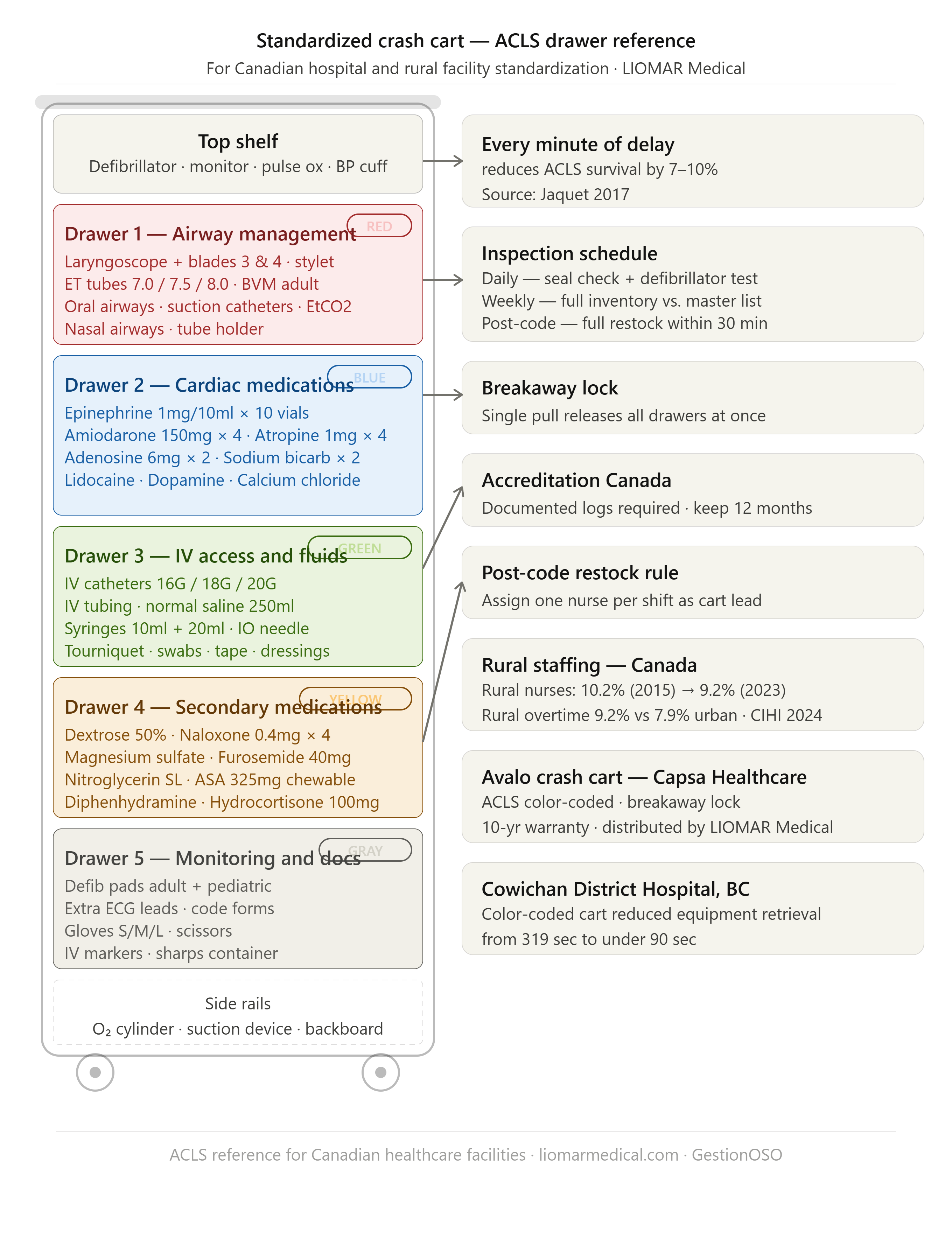
Top Shelf
Defibrillator or AED with charged pads, cardiac monitor with leads, pulse oximeter, blood pressure cuff.
Drawer 1 – Airway Management (Red)
Laryngoscope handle with blades sizes 3 and 4, endotracheal tubes sizes 7.0, 7.5, 8.0, 10 ml syringe for cuff inflation, stylet, bag-valve mask adult size, oral airways sizes 80, 90, 100 mm, nasal airways, suction catheters, end-tidal CO2 detector, tape or tube holder.
Drawer 2 – Cardiac Medications (Blue)
Epinephrine 1 mg/10 ml minimum 10 vials, amiodarone 150 mg/3 ml minimum 4 vials, atropine 1 mg/10 ml minimum 4 vials, sodium bicarbonate 50 mEq/50 ml minimum 2 vials, adenosine 6 mg/2 ml minimum 2 vials, lidocaine 100 mg/5 ml, dopamine 400 mg/250 ml, calcium chloride 1 g/10 ml.
Drawer 3 – IV Access and Fluids (Green)
IV catheters 16G, 18G, 20G, IV tubing sets, normal saline 250 ml bags, alcohol swabs, tourniquet, tape, transparent dressings, 10 ml and 20 ml syringes, needles 18G and 21G, IO needle if IV access is unavailable.
Drawer 4 – Secondary Medications (Yellow)
Dextrose 50% 50 ml, naloxone 0.4 mg/ml minimum 4 vials, magnesium sulfate 2 g/50 ml, furosemide 40 mg/4 ml, nitroglycerin sublingual, aspirin 325 mg chewable, diphenhydramine 50 mg/ml, hydrocortisone 100 mg.
Drawer 5 – Monitoring and Documentation
Defibrillator pads adult and pediatric, extra ECG leads, code documentation forms, gloves multiple sizes, scissors, markers for labeling IV lines.
Side Rails and Accessories
Oxygen cylinder with regulator and mask, suction device with tubing, backboard for CPR, sharps container.
All medications must be checked for expiration dates at every inspection. Expired items must be replaced before the tamper seal is reapplied.
HOW TO RUN A CRASH CART INSPECTION THAT SATISFIES ACCREDITATION CANADA
Step 1 – Visual Security Check (Daily, 2 minutes)
Confirm the tamper-evident seal or breakaway lock is intact and numbered. Record the seal number on the inspection log. If the seal is broken or missing, open the cart and complete a full inventory before resealing. Document the inspector name, date, time, and seal number.
Step 2 – Defibrillator Test (Daily, 3 minutes)
Power on the defibrillator, run the self-test, confirm battery charge is above 80%, test the printer, and replace paper if needed. Follow the manufacturer discharge test protocol if required. Document the result.
Step 3 – Full Inventory Check (Weekly, 20 minutes)
Open all drawers and verify every item against the facility master inventory list. Check every medication expiration date. Inspect all equipment for damage or compromised sterile packaging. Restock any missing or expired items before resealing. Document findings and sign off.
Step 4 – Post-Use Restock (Within 30 minutes of any code)
After any code, the cart must be fully restocked and resealed before returning to its station. Assign a specific nurse responsible for post-code restock on every shift. Document all items used and verify the restock.
Step 5 – Documentation and Audit Trail
All inspections must be logged in a format producible during an Accreditation Canada survey. Logs should capture date, time, inspector name, seal number, defibrillator test result, any discrepancies found, and corrective actions taken. Maintain 12 months of inspection logs.
CANADIAN STANDARDS AND GUIDELINES FOR CRASH CARTS

Accreditation Canada Requirements
Accreditation Canada Required Organizational Practices include emergency equipment availability as a patient safety priority. Surveyors inspect crash carts for proper organization, documented inspection records, staff competency, and defibrillator maintenance logs. Facilities that cannot produce inspection documentation risk accreditation deficiencies.
Provincial Variations and Local Protocols
Each provincial health authority may add requirements beyond the national framework. Alberta Health Services, Ontario Health, and Quebec Ministry of Health each publish emergency preparedness guidelines that facilities must incorporate. LIOMAR Medical can help administrators navigate provincial requirements when configuring cart orders.
Securing Federal Funding for Rural Healthcare Standardization
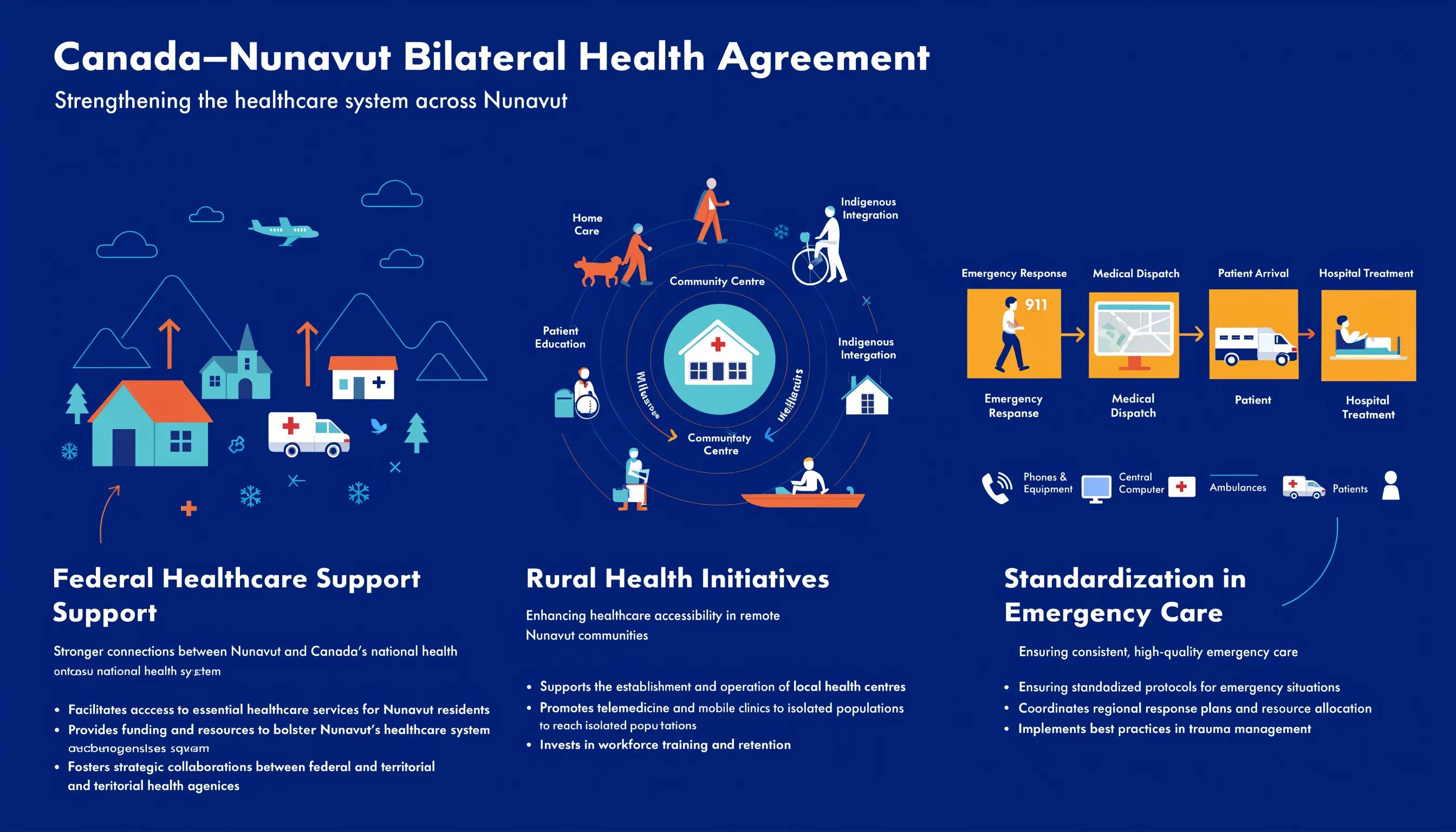
The Canada-Nunavut Bilateral Health Agreement (2023-2026)
The Canada-Nunavut Bilateral Health Agreement allocates approximately 7.1 million dollars per year to Nunavut to strengthen healthcare infrastructure, expand family health services in rural communities, and reduce dependence on costly medical evacuations. Capital and operational expenditures including medical equipment procurement are listed as eligible uses of this funding. Remote facilities can reference this agreement directly when building a procurement case for crash cart standardization programs.
Federal Investment Priorities: Rural Access and Healthcare Infrastructure
The four shared health priorities in the federal bilateral agreements are expanding access to family health services including in rural and remote areas, supporting the health workforce, improving access to mental health services, and modernizing health data systems. Medical equipment standardization fits under the first priority and supports the second by reducing cognitive burden on stretched rural staff.
How Rural Facility Administrators Can Access Federal Funding
Administrators should take three concrete steps. First, contact their provincial health authority to identify which bilateral agreement programs apply to equipment procurement in their province or territory. Second, review the facility capital equipment plan against eligible expenditure categories in the applicable bilateral agreement. Third, engage directly with Health Canada regional office to confirm program availability and application timelines. LIOMAR Medical can provide product documentation to support procurement applications.
SPOTLIGHT: THE AVALO CRASH CART BY CAPSA HEALTHCARE
For rural Canadian hospitals, the right crash cart is not just a product. It is a system that compensates for the realities of rural practice: high staff turnover, locum physicians unfamiliar with local setups, limited time for training, and the need for absolute reliability when a code happens once a month rather than once a day.
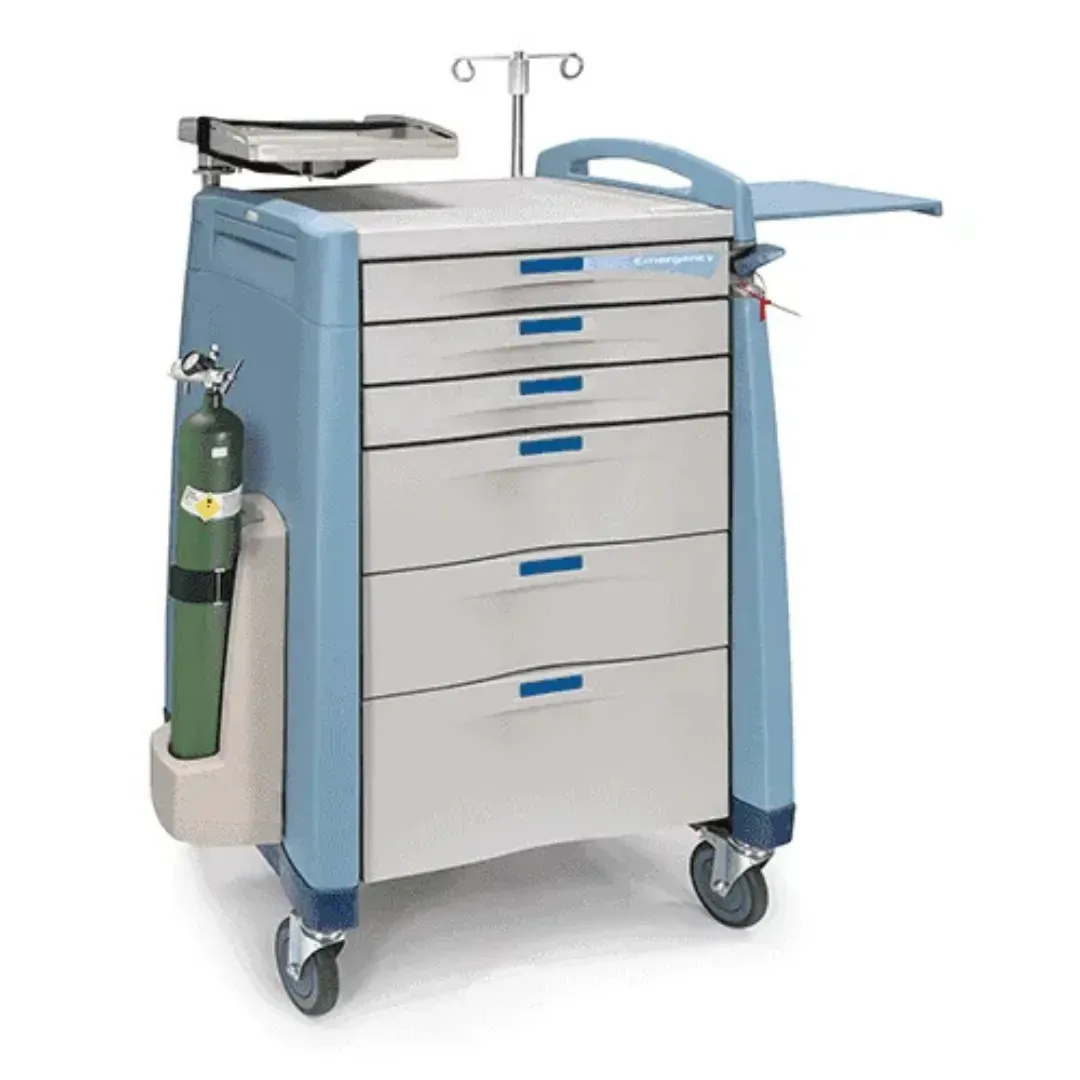
The Avalo Crash Cart by Capsa Healthcare, distributed nationally by LIOMAR Medical at https://www.liomarmedical.com/product/avalo-crash-cart/, is built around these realities.
Breakaway Locking System for Instant Code Response
The Avalo proprietary breakaway locking system provides instant, tool-free access during a code. A single pull releases all drawers simultaneously. Between emergencies, tamper-evident plastic seals provide visual confirmation that the cart has not been accessed since its last inspection. This dual system satisfies both the speed requirement of emergency response and the documentation requirement of accreditation inspections.
Color-Coded ACLS Drawer Organization
Avalo drawers are available in standard ACLS color-coding. For a locum physician arriving at a rural facility for the first time, or a nurse called from another unit to assist during a code, this means navigating the cart without being shown where the tools and instruments are stored.. That is exactly the point.
Configurable for Any Facility Size or Protocol
The Avalo is available in multiple configurations with customizable drawer layouts, accessory rails, oxygen cylinder holders, and defibrillator platforms. LIOMAR Medical works with each facility before the cart ships to confirm the configuration matches the facility protocols, physical space, and defibrillator model.
10-Year Warranty and National Distribution
The Avalo Crash Cart is backed by a 10-year limited warranty on the cart body and frame. LIOMAR Medical delivers and supports the cart across Canada including to rural and remote locations, with warranty service available nationally.
HOW LIOMAR MEDICAL SUPPORTS RURAL HOSPITALS ACROSS CANADA
National Delivery to Remote Areas
Complimentary Workflow Assessments
Before a cart ships, LIOMAR Medical offers complimentary workflow assessments to ensure the right Avalo configuration is matched to each facility layout, emergency protocols, and team structure. This step prevents the common problem of receiving a cart that does not fit the actual space or workflow it was purchased for.
FREQUENTLY ASKED QUESTIONS
What kind of cart is used for an emergency situation?
A crash cart, also called a code cart or emergency cart, is used during cardiac arrest and other life-threatening emergencies. It is stocked with resuscitation medications, airway management supplies, IV access materials, and a defibrillator platform. The Avalo Crash Cart by Capsa Healthcare, available through LIOMAR Medical, is a leading option for Canadian hospitals.
What is in the drawers of a crash cart?
A standard ACLS crash cart contains epinephrine, amiodarone, atropine, sodium bicarbonate, and other cardiac medications, along with IV access supplies, airway management tools, and monitoring equipment. See the complete drawer-by-drawer breakdown earlier in this article for the full reference list.
How often should crash carts be inspected in Canadian hospitals?
Most Canadian facilities perform a daily visual security and defibrillator check, a weekly full inventory check, and a complete restock within 30 minutes of any code. Accreditation Canada expects documented records of all inspections to be available for survey.
What is the difference between a crash cart and a medication cart?
A crash cart is stocked exclusively for cardiac arrest and life-threatening emergencies. A medication cart is used for routine medication dispensing during nursing rounds. They serve completely different purposes and should never be substituted for one another.
Can rural hospitals get crash carts delivered across Canada?
Yes. LIOMAR Medical provides national distribution including to rural and remote facilities. Contact the team to discuss shipping timelines, volume pricing, and configuration support.
REQUEST A QUOTE FROM LIOMAR MEDICAL
LIOMAR Medical provides personalized quotes based on your facility size, emergency protocols, and configuration requirements. Whether you are standardizing one unit or an entire rural hospital network, contact LIOMAR Medical at https://www.liomarmedical.com/contact/ to get started.